Birds In Your Naturehood
Our 2025-2026 Naturehood Program: Birds In Your Naturehood
September 21st, 10am-2pm: (Urban) Birds In Your Naturehood, Halifax
October 12th, 2-4pm: (Shore) Birds In Your Naturehood, Grand Pre
January 3rd, time TBD: (Winter) Birds In Your Naturehood, Sydney
More birdy events coming soon! Check back later!
Looking back on our 2024-2025 Naturehood Program: Turning Young Naturalists Into Activists
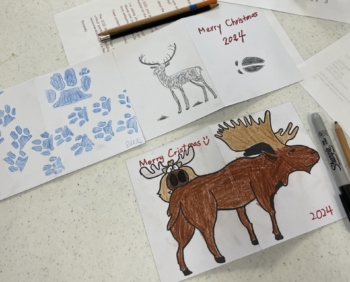
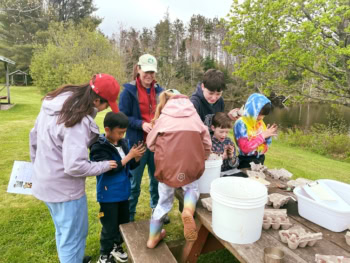
Young people are understandably upset about the state of the natural world. In 2024-2025, we helped them find their voice and turn their knowledge into tangible action for nature. Young naturalists from urban and rural communities around Nova Scotia took on citizen science, writing letters to decision makers, and created artwork that shared a wider call to action, thanks to Nature Canada’s support of our 2024-2025 Naturehood program. We are especially grateful to Nature Canada and our friends at Immigrant Services Association of Nova Scotia for helping us engage more BIPOC and new Canadian youth last year. Canadians are just as diverse as our natural history and it’s vital that we close gaps in access for the communities that need it most.
We learned a lot about how young people want to engage with nature and activism in 2024-2025. We engaged over 300 young Nova Scotians in 2024-2025 and are hopeful we’ll be able to apply lessons learned to do more in 2025-2026. Stay tuned for updates on future education and outreach plans as we finalize our new Strategic Plan.
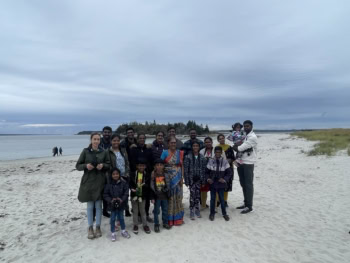
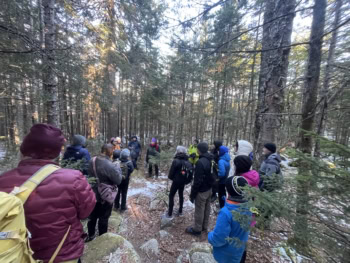
Check out these snapshots from 2024-2025!



Nature School
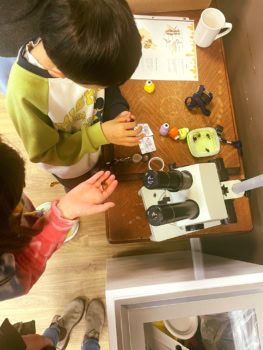
We often hear from educators in Nova Scotia who struggle to find locally-relevant natural history learning resources or who want to get their students outside but don’t know where to start. Nature School is our response to that need and intended to be a living initiative that improves with teacher feedback over time. Over September 2025 to end of March 2026, we delivered free in-school and in-field programing for elementary grades looking to learn more about birds and protected areas in Nova Scotia. As of 2026, we are working to deliver nature school through a paid model.
Our programs are available to public, private, and homeschool classes and focus on curriculum-aligned activities related to birds, their lifecycles, and habitats.
Our 2026-2027 Nature School programs include:
Grades P-3: Bird Form & Function
Grades 4-6: Bird Habitats & Population Trends
Both programs can be delivered either in school or on-site, and include both Nature Nova Scotia staff facilitation and a resource package for teachers.
Book Your Class Today
Lesson Plans
Nature learning is stippled throughout Nova Scotia’s public school curriculum but it can be difficult for teachers to make connections across goals and learning outcomes, especially where biodiversity and experiential learning are so often underrepresented. We’ve created a small selection of resources for teachers to use in class (and in the field) to integrate their goals and nature literacy. Some of these are available in print through our current Nature School program, but all educators are welcome to download any of our lesson plans here and use them in your own nature explorations! Have feedback for us? Let our education staff know how we could improve these resources:
Celebration of Nature
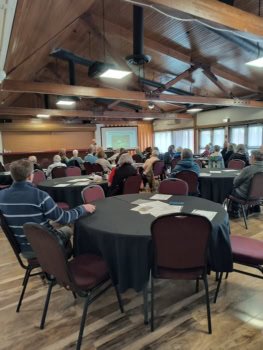
Each May, we organize a gathering for naturalists in a symposium program that includes talks, guided outings, and a youth program. We explore protected areas, learn about sustainable management on working lands, and hear about new research, stewardship, and activism initiatives.
In 2025, we went on a coastal adventure with friends at the Cliffs of Fundy Geopark, learning about local geology and wildlife, a youth program delivered by the Young Naturalists Club, and, most importantly, catching up and enjoying some tunes and good food.
Stay tuned for the 2026 Celebration of Nature program!
Biodiversity Badge
The Biodiversity Badge is a collaboration between Hike Nova Scotia and Nature Nova Scotia that encourages Nova Scotians to contribute to citizen science while racking up the kilometers! To qualify for the badge, you must complete at least 10 hikes and, for each one, upload 10 or more plant, animal, fungi, or other life observations via iNaturalist.
To apply for your badge, you must report on the areas hiked and provide your iNaturalist username to Hike Nova Scotia to verify your citizen science contribution. Get out there and start logging those hikes!
Check out this blog post from Hike Nova Scotia board member Jonathan Riley describing their journey towards 10 hikes and 100 iNat observations.