The Threat
Though the mainland moose (Alces alces americana) population in Nova Scotia was officially declared endangered under the provincial Endangered Species Act in 2003, many Nova Scotians are unaware that moose on the mainland are at risk, little action has been taken to date, and the population has not recovered. An estimated 1,000 individuals make up the provincial population today—far below the provincial Recovery Plan’s target of 5,000 moose.
The mainland moose is distinct from the Cape Breton moose (Alces andersonii), a western subspecies that was introduced to the island after the native moose died out. The native moose is found in isolated pockets within the Cumberland/Colchester Highlands, intact forests from Pictou/Antigonish to Guysborough area, and the Tobeatic region. Primary threats to the mainland moose include habitat loss, fragmentation, poaching, and disease introduced by newly naturalized white-tailed deer. Though the introduced western moose in Cape Breton and native moose in New Brunswick are also negatively affected by these threats, for reasons we don’t yet understand, moose on the island and other side of the Chignecto Isthmus do not seem to respond to these threats in the extreme ways moose on the mainland do.
Since 2022, we’ve led a seasonal series of educational events across Nova Scotia sharing moose ID tips with participants and, in 2023, launched a volunteer trail camera monitoring network and public knowledge survey. With the help of the Nova Scotia Habitat Conservation Fund, Wildlife Habitat Canada, and individual donors, we’ve managed to expand on this work over the last few years by expanding our outreach to new demographics and adding additional trail cameras to our monitoring network, focusing on rural Halifax, Guysborough, Colchester, and Cumberland areas.
Our Findings To Date
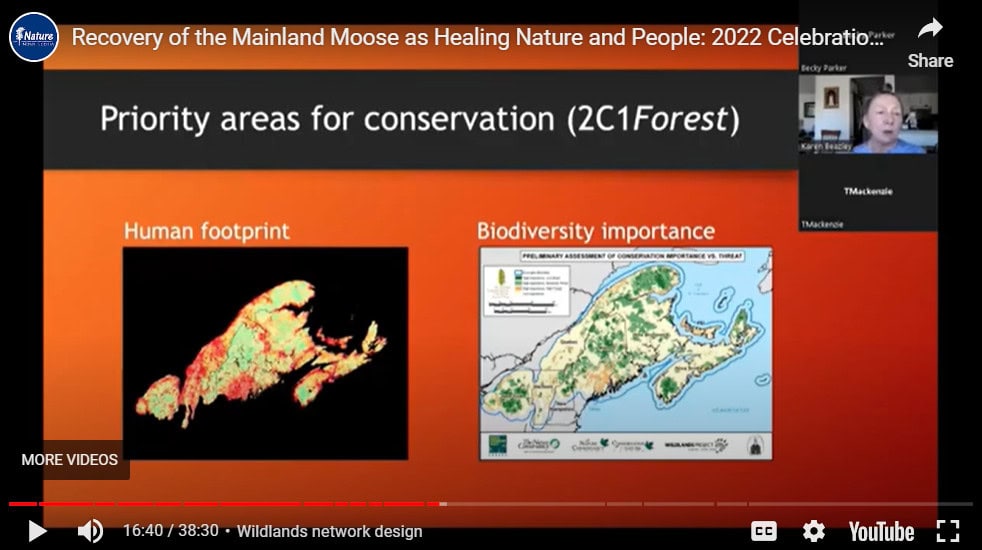
Over 2022 to 2024, we identified concerning gaps in public awareness of the mainland moose, particularly among younger and urban-dwelling Nova Scotians, noted heightened concerns about poaching in the Tobeatic region and, encouragingly, found potentially greater awareness of moose conservation issues in the Cumberland/Colchester area, where there may simply be more moose for Nova Scotians to encounter.
Sixty-one percent (61%) of nearly 600 survey respondents had seen a moose on the mainland in their lifetime, with many sightings occurring between 10 – 20 years ago. Many respondents were confident in their ability to identify signs of moose in the landscape, such as tracks or scats. Most young Nova Scotian respondents had never seen a moose and some respondents were surprised to learn that the moose is endangered, even when they reported not seeing many in recent years.
We also confirmed our previous suspicions that many Nova Scotians are not reporting moose or signs of moose to the provincial hotline, with seventy-seven percent (77%) of survey respondents who had seen a moose saying they were not aware of the provincial hotline or that they chose not to report their sighting. In cases where knowledgeable respondents (Nova Scotians who could recognize moose sign and told us they were seeing moose) chose not to report their sightings, skepticism of provincial efforts to conserve the mainland moose or its habitat and mistrust of the Department of Natural Resources were overwhelmingly given as reasons for the respondents’ behaviour. These respondents do seem comfortable speaking with and reporting moose signs to Nature Nova Scotia staff, so we are hopeful that continued community engagement will break down these awareness- and trust-related barriers.
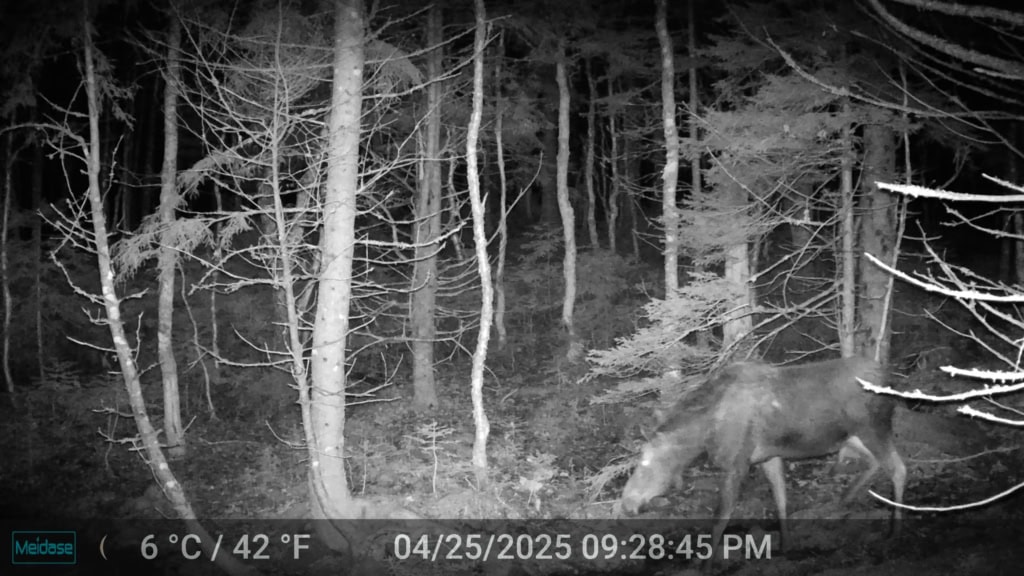
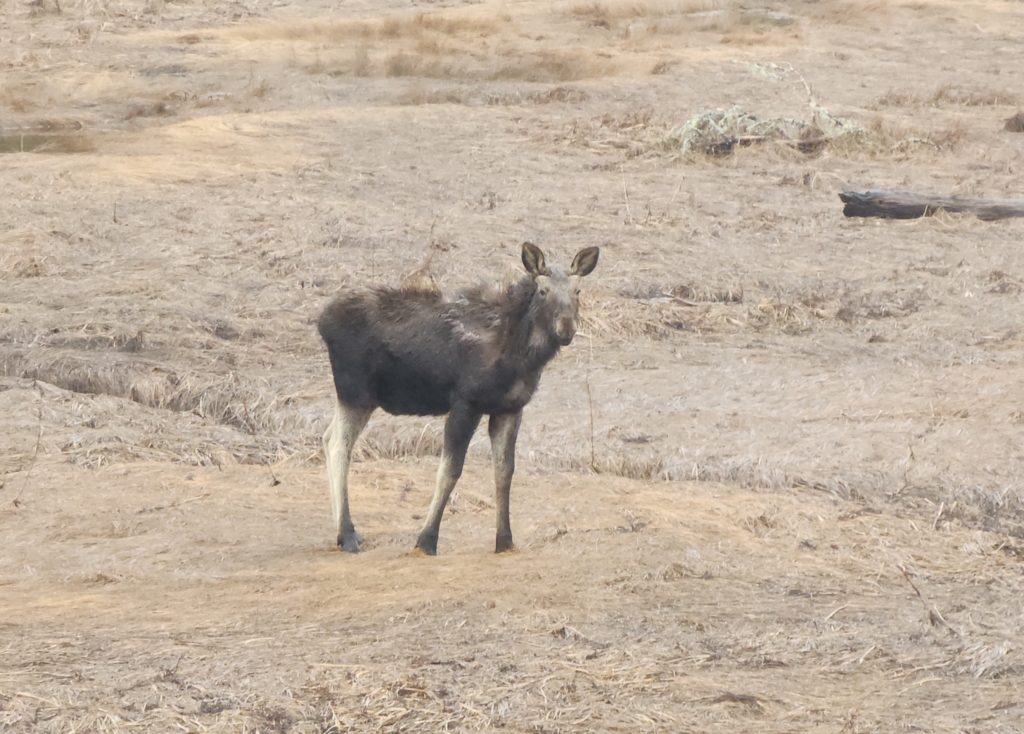
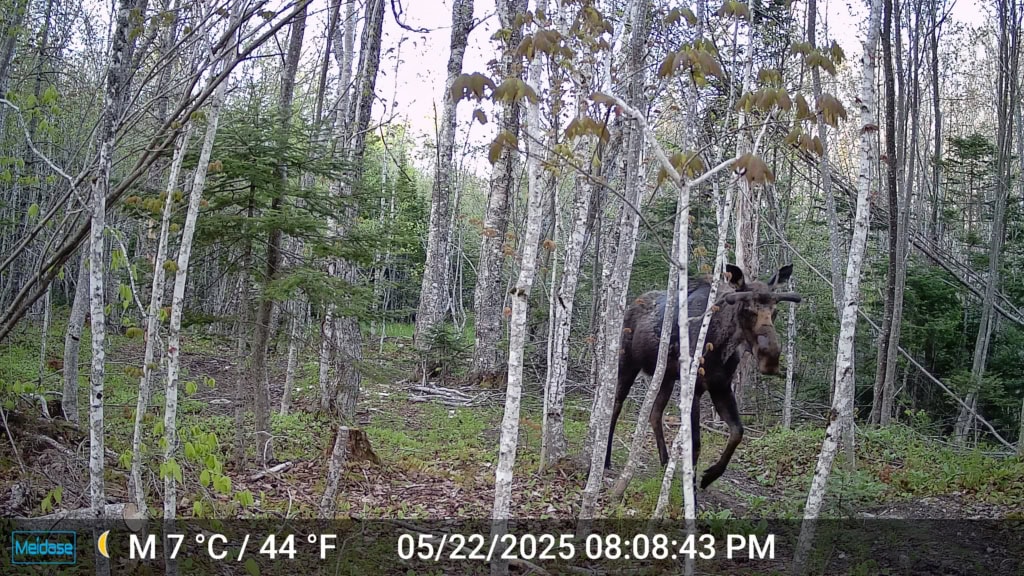
Our trail camera volunteers spotted their first moose in 2025, have located 7 more moose in the time since, and we continue to hear reports from Nova Scotians across the mainland who are seeing moose or signs of moose on the landscape. We are sharing our data with the province and report regularly to grant funders and our own donors.
Help Us Engage More Nova Scotians in Monitoring
We hope to reach 100 trail cameras deployed by the end of March 2027. Between the sighting reports Nova Scotians continue to share with us and our growing trail camera network, we are well poised to fill those population data gaps outlined in the updated Mainland Moose Recovery Plan. You can help us keep the work going by donating to our Species At Risk Fund.
Can You Go A Step Further?
We commend the province for finally producing a strong Recovery Plan for moose, especially in highlighting the need for greater need for collaboration to fill knowledge gaps and for changes to forestry practices in moose habitat. Now, we must ensure the government follows through on the recommendations of its own experts.
You Can Help:
Explore The Issues – Explore our summary of recovery plan actions to date and what’s still needed for effective conservation.
Get A Lawn Sign – Show your support for species at risk and the need to transition to ecological forestry by displaying a Save Species At Risk lawn sign in your community.
Send A Message – Urge the Minister of Natural Resources and Renewables to designate Core Habitat for the Mainland Moose, as recommended by the province’s own Recovery Planning team.